The Science Behind Reaction Time in Competitive Gaming
What neurological and physiological factors determine how quickly a player can respond to in-game stimuli — and how consistent testing separates signal from noise.
Read ArticleNovexaro provides structured, evidence-informed performance assessments for competitive gamers, casual players, and esports teams. Understand where your skills actually stand — and what the data suggests about improving them.
This simplified demo illustrates how our reaction time module works. Click the target when it appears, and the system records your response latency. Real assessments use multi-round averaging, environmental calibration, and input device compensation to produce accurate results.
Professional reaction testing considers far more than raw speed — context switching, sustained accuracy under cognitive load, and consistency across extended sessions all factor into a complete performance profile.
Average human reaction time ranges from approximately 150ms to 300ms depending on stimulus type and cognitive context. Elite esports athletes consistently record below 200ms under controlled conditions.
Press "Start Test" to begin
Each evaluation module is designed around established research in cognitive science, motor learning, and human-computer interaction. Our goal is accurate measurement, not flattery.
Measures the latency between a visual or auditory stimulus and your physical input. Our methodology accounts for monitor refresh rate, peripheral type, and click or keystroke travel time to isolate your actual neuromuscular response window.
Tracks: Simple RT, Choice RT, Serial RT, Discrimination RT
Evaluates decision-making quality under time pressure and incomplete information — conditions that closely mirror competitive gameplay. The assessment presents structured scenario simulations and measures decision consistency, risk calibration, and priority handling.
Tracks: Decision latency, risk tolerance, multi-objective trade-off accuracy
Examines how individual performance changes in team contexts. Many players perform differently when coordinating with others versus playing solo. This module measures communication timing, role adherence, and responsiveness to teammates' actions in simulated multiplayer frames.
Tracks: Synchrony index, role consistency, team reaction latency
Analyzes the relationship between your hardware configuration — GPU framerate, CPU bottlenecks, monitor refresh rate, peripheral polling rates — and measurable gameplay outcomes. Understanding your equipment's actual impact helps you make informed decisions about where hardware improvements have real effect versus marginal returns.
Tracks: Frametime variance, input pipeline latency, thermal performance impact
Identifies how cognitive factors like working memory capacity, attentional switching, and spatial reasoning correlate with your in-game performance. This module does not diagnose any condition — it provides a structured data profile that reflects cognitive tendencies as expressed through gameplay behavior.
Tracks: Working memory index, attention switching cost, pattern recognition speed
Most single-session tests provide a snapshot. Our longitudinal tracking module records data across multiple sessions and identifies trends, plateaus, and regressions over time. This gives you a more reliable picture of actual skill development rather than day-to-day variance.
Tracks: Session-over-session deltas, fatigue patterns, peak performance windows
Skill acquisition in gaming follows predictable stages. Understanding where you are in this progression helps contextualize your assessment results.
Learning core mechanics, control systems, and basic game structure. High cognitive load, low automation.
Mechanical actions begin automating. Attention shifts from controls to game state and opponent behavior.
Players begin reading situational patterns. Decision speed increases as recognition replaces deliberation.
Skills transfer across unfamiliar situations. Performance degrades less under pressure or fatigue.
Players analyze their own tendencies and opponents' strategic patterns simultaneously during gameplay.
Marginal gains through microadjustments to positioning, timing, resource management, and team communication.
Our platform translates raw assessment data into structured visual reports that make patterns clear and actionable.
Our team combines backgrounds in cognitive science, data engineering, esports performance research, and editorial communication.

Holds a doctorate in human motor learning and has published work on cognitive fatigue in extended competitive play. Oversees the scientific validity of all assessment modules.

Eight years of experience building analytics pipelines for performance tracking systems. Responsible for data architecture, measurement calibration, and reporting infrastructure.

Former semi-professional player who transitioned into performance analytics research. Focuses on contextualizing assessment data within the specific demands of different game genres.

Leads content strategy and editorial standards. Ensures that all published material maintains accuracy, appropriate uncertainty, and accessibility for non-specialist readers.
Long-form, research-oriented articles on gaming performance, cognitive science, and hardware analysis.
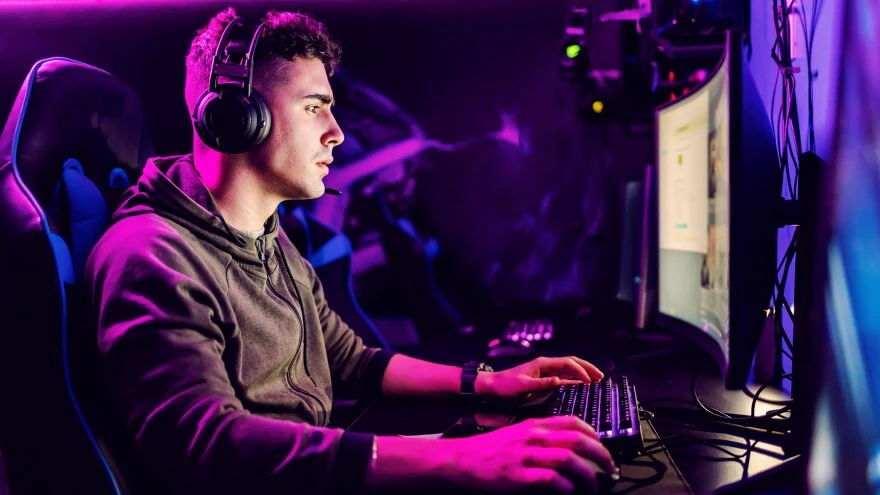
What neurological and physiological factors determine how quickly a player can respond to in-game stimuli — and how consistent testing separates signal from noise.
Read Article
Examining why repeated, structured assessment produces more reliable skill insights than practice volume alone — and what the data shows about long-term improvement patterns.
Read Article
A grounded look at frametime, polling rates, and thermal performance data — and which hardware metrics have meaningful impact on gameplay versus which are largely marketing figures.
Read ArticleNovexaro's assessment tools are designed to provide structured, data-informed insights into your gaming performance. There are no guaranteed outcomes — only measured data and your own informed interpretation of it.